


Delta THC products are all different because the terpenes and amount of cannabinoids in each strain make them unique. Among the most popular strains on the market are Delta 10 and Delta 8. Despite their popularity, people often mix them up. But with such similar names, can you blame them?
But we’re here to help. In today’s blog post, we’ll help you decode the differences between Delta 8 vs Delta 10, from their structure, benefits, and side effects. We’ll also answer some frequently asked questions – you’re welcome.
Read next: Delta 8 Flower – The Ultimate Guide
What Is Delta 8?
Delta 8 is a minor cannabinoid found in the cannabis plant. It is structurally similar to delta-9-tetrahydrocannabinol, the main psychoactive compound in cannabis, but is believed to have a lower psychotropic potency.
Research suggests that Delta 8 effects may be comparable to those of Delta 9, but with a much smaller likelihood of experiencing negative effects. What’s not to love?
Delta 8 THC has been found to have potential therapeutic benefits, such as reducing anxiety, improving appetite, and reducing pain. It is also believed to have antiemetic properties, making it useful for reducing nausea and vomiting. Delta 8 is available in a variety of products such as oils, tinctures, gummies, and vape cartridges.
Potential Benefits and Side Effects of Delta 8
The benefits of Delta 8 use may include pain and stress relief, relaxing and calming effects, and mild euphoria.
On the other hand, Delta 8 has more potential negative side effects compared to Delta 10. The negative effects are comparable to those brought on by Delta 9 use. Potentially unpleasant side effects such as elevated anxiety, a rapid heart rate, lapses in memory, sluggish response times, disorientation, dehydration, red eyes, and a dry mouth may occur during usage.
What Is Delta 10?
Delta 10, also known as delta-10-tetrahydrocannabinol, is a synthetic version of tetrahydrocannabinol (THC), which is the primary psychoactive compound found in cannabis. It is structurally similar to THC and has a similar chemical formula, but with slight differences in the arrangement of atoms. These differences result in a compound with a distinct chemical structure and potentially different effects.
Delta 10’s potency can vary, but in general, it is less potent than Delta 8. More importantly, it doesn’t have any of the side effects that come with other forms of THC, like anxiety and paranoia. The long-term effects still need to be researched.
The process of making Delta 10 is complicated and requires a lot of refinement. Oil is extracted from the cannabis plant, which is then processed to produce Delta 10 THC. Because this process is so complicated and requires a lot of refinement, there are some safety concerns about its production. This is why it’s important to have lab tests done by a third party.
Potential Benefits and Side Effects of Delta 10
The most common benefits of Delta 10 include feeling energetic and euphoric, increased appetite, and psychoactive effects.
What about negative side effects? Supposedly, there’s almost none.
But Delta 10 THC that is made in a lab can pose a health risk. Because of this, you should stay with reputable companies that provide verified synthetic versions.
Delta 8 vs Delta 10 Differences
There are several differences when comparing Delta 8 vs Delta 10. Once you know what they are, you’ll have no trouble telling one from the other!
Delta 8 and Delta 10 are two different types of THC, the primary psychoactive component of cannabis. Delta 8 THC is an isomer of CBD, while Delta 10 THC is an isomer of Delta 9 THC.
Delta 8 is widely perceived as being the stronger of the two, due to its higher potency, but individual tolerance can play a role in this. Delta 8 has more cannabinoids, which makes it stronger. Delta 8’s psychoactive effects last much longer than those of Delta 10, which are more like those of Sativa strains. Delta 8 is known to produce a more energizing, uplifting high than Delta 10, while Delta 10 produces a more sedating, relaxing effect.
Because their effects and potency are so different, they also tend to be used for different reasons. As the saying goes, different strokes for different folks. Delta 10 THC is renowned for its euphoric high, with few, if any, adverse effects, making it an attractive option for recreational users. Because the effects tend to make users feel relaxed, it may also help soothe anxiety. Whereas Delta 8 THC is typically used medicinally to help alleviate pain or treat sleep disturbances.
Ultimately, the effects of both Delta 8 and Delta 10 will vary from person to person and it is best to experiment with both to find out what works best for you.
FAQ
Is Delta 8 Legal?
The Federal Farm Bill of 2018 states that hemp that has less than 0.3% by weight of Delta 9 is acceptable for production, trade, and possession. So yes, Delta 8 THC and other hemp-derived cannabinoids are legal in most states.
Is Delta 10 Legal?
Delta 10, made from hemp-derived CBD, is legally available in all 50 states. As for Delta 10 goods, these may be unlawful in certain areas, so we suggest staying up to date with THC and CBD-related news and legislation.
Is Delta 8 or Delta 10 Stronger?
The strongest between Delta 8 vs Delta 10 is believed to be Delta 8, due to its higher potency. Although this can also depend on individual tolerance.
Where Can You Buy Delta 8 and Delta 10?
There are tons of online retailers where you can buy Delta 8 and Delta 10 products in a variety of shapes and sizes. But make sure the company you choose to support only sells products that have been tested by independent third-party labs. You also want to check that their lab findings are easily accessible and match the listed ingredients on product labels.
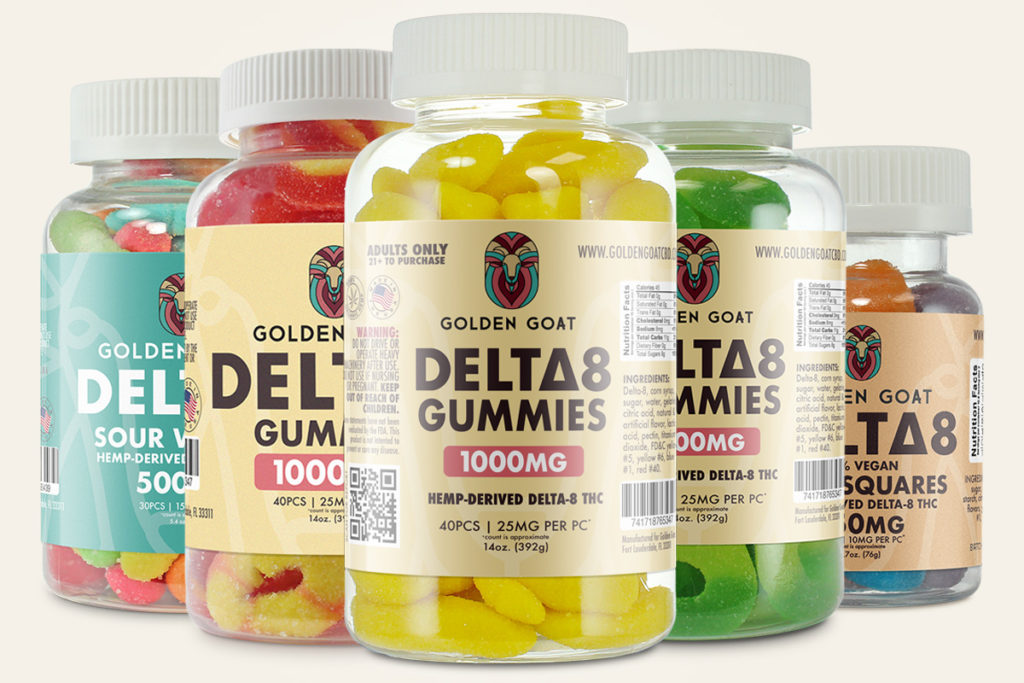
Try me: We love these Delta 8 Gummies from Golden Goat.
DISCLAIMER: THIS ARTICLE DOES NOT PROVIDE MEDICAL ADVICE
The information in this article, including but not limited to text, images, graphics, and other material contained herein, is for informational and educational purposes only and is solely intended to be used as a self-help tool. The information in this article and website does not substitute for professional medical advice, treatment, or diagnosis. Always seek guidance and advice from a qualified healthcare provider before undertaking a new healthcare regimen.